
Bound to something
On addiction, culture, and the slow return to a clear mind


This is one heartfelt piece by Cristalebelle for the Real Talk community. Embrace it with love.

Can we really survive without an addiction?
Times right now are getting wilder, and I wonder if folks are beginning to cling to their vices or comforts now, more than ever. It feels as if this world was designed for us to find a crutch in life that we will use to escape, comfort, soothe, or enhance our lives.
Addiction is a strong word here. We all know why and what that word makes us feel.
The origin of it makes it even stronger. Addictus from Ancient Rome meant “to be bound over” or “enslaved.”
From that knowledge, it begins to unravel that perhaps we are the ones committing to our own enslavement through our addictions, whether they are healthy or terribly destructive.
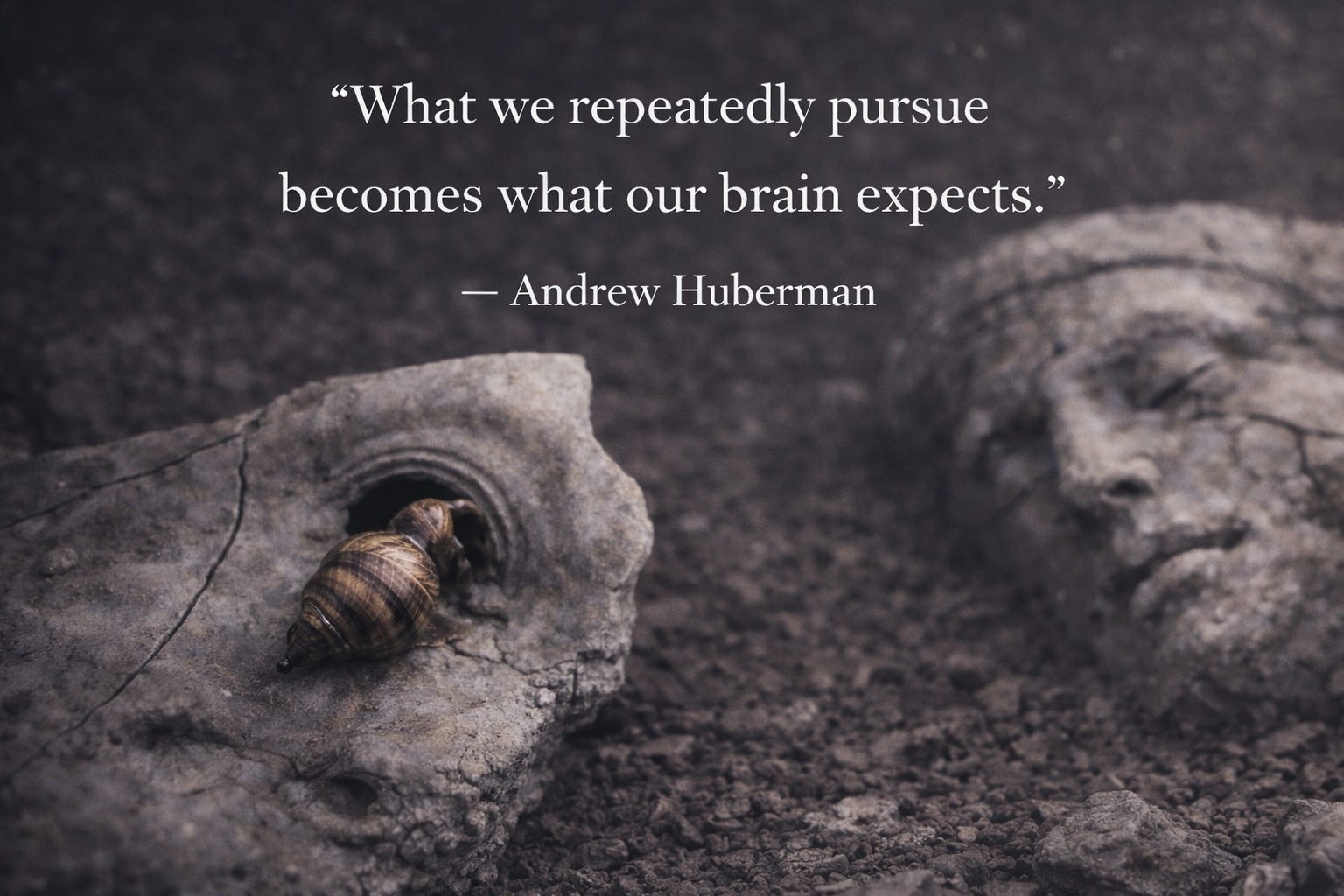
“What we repeatedly pursue becomes what our brain expects.” — Andrew Huberman.
I learned what “bound” really means in a cabin, at ten in the morning, watching someone unravel in real time.
A compulsive habit is what I am observing on this day, and the meaning of addiction has grown to include a wider range of habits. Sadly, many are still under the guise of self-soothing and comfort.
My earliest observation of addiction was understanding that folks had an unhealthy obsession with food, then, of course, cigarettes, and alcohol. Back then, the alcoholics were a mess and easy to spot, at least in my experience.
I grew up seeing folks in my family imbibing heavily on family occasions. It was widely accepted, but the results were not cute. Uncles arguing and getting aggressive over issues that, in their clear minds, they could have discussed and maybe come to a conclusion. But the mix of substances created a space for them to be out of control and dysregulated.
A space of chaos was what it was.
It did not happen often, but I recall the few occasions where words were said or energies were created that made people uncomfortable. Being young and impressionable, I absorbed it all.
I grew up in the 1980s and 1990s, where the vibe was always family and lots of people around. A time when no one spoke to me about the dangers of overdoing it. All I was told was never to drink. Do not smoke. Do not do drugs.
As some of us grew up in religious or strict households, we held off for a while. Then our curiosity took the best of us, and we dabbled here and there for years to come.
I had acquaintances or people I had known who had taken acid, and it messed up their minds. They lost themselves to drugs or later passed away at the hands of a drunk driver. There were many ways addiction affected their lives and those of others.
I was always intentional and only partook with friends on occasions.
The late 1990s and early 2000s brought on a party vibe that was infectious. I was young, and my then-husband and I loved to go dancing on the weekends and unwind with friends.
Again, intentional hangs and drinks.
But as the years wore on and wine became the new snack with friends, we began to loosen our boundaries with it. It was not just with friends, but at dinner, or dinners, or just to unwind.
Then that is where the bondage came in.

A connection that, if you drank, you escaped to a higher society that first filled your cup, tempted your taste buds, and wooed your mind into a romanticized version of your life experience.
So, for the better part of my twenties and thirties, I had a palate and a soft landing with wine. However, I always partook and behaved in a way that I would not need to go back to it the next day or days after.
It was not until my mid-thirties that I met the wrong people after a failed employment situation and a nerve-wracking breakup that I was led by my hand to the happy hour hangs, which turned into after-hours.
The alcohol was no longer a here-and-there indulgence, but a means to have fun with these people who played “friends” but encouraged a lifestyle dangerous and blind to my brain receptors.
I partook in many unhealthy evenings and wasted dollars, and I willingly participated.
Why?
Why would I partake in something so detrimental that the very people then began to take advantage of me and put me in dangerous and uncomfortable situations?
Yes, I was in my thirties and should have known better. But you never know when the dragon of bondage to a substance or to the pursuit of a good time will overcome you.
As a crutch, I could say it was my divorce, breakups, and failings. But the truth is, I surrounded myself with the wrong people, and my inner compass, telling me to stop, had completely shut off.
Afterwards, I would suffer greatly and immensely. I will not say why or how, as I am saving that for another story, but my point is that I was building a dopamine dependency on having a good hang.
Our culture suggests that a drink will elevate every moment.
In today’s culture, I have observed that it has become the Mary J. I will come back to that. But for now, this is how I took my life back.

I let it all fall apart without realizing it, and then I met someone who helped me see that even pharmaceutical drugs we take for depression create a dependency.
For a whole year, I did not go out anymore, and I barely drank. I struggled to care for my mental health, but I found an outlet in my creativity.
A few years later, I went back to being a normal drinker when hanging with friends. I was lonely after moving back east after a stint out west, and I grew closer to a friend I had gone clubbing and partying with years earlier.
I wanted to start fresh and simply needed someone to connect with. At the time, I was dealing with a dark night of the soul.
A dark night of the soul is often defined as a painful stripping away of ego, attachments, and false identity before spiritual renewal. The term originates from the mystic St. John of the Cross in the sixteenth century.
This dark night of the soul almost took me out, and in a sense, it did. From my former self to someone becoming spiritually tuned.
It is a kind of ego dissolution and refinement.
So I needed to connect with someone, anyone, who could see me in my suffering.
That was my friend, I will call Shell.
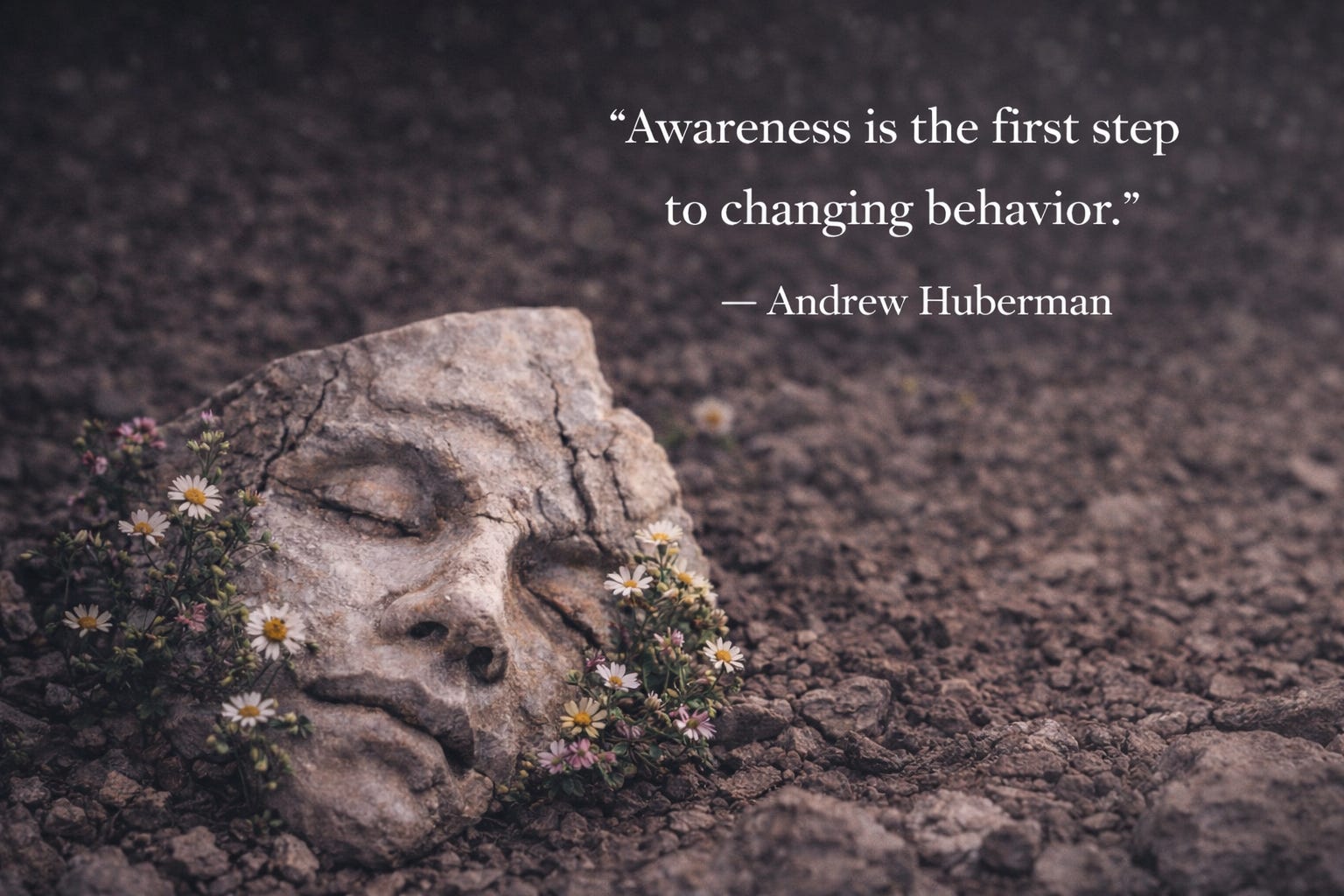
“Awareness is the first step to changing behavior.” — Andrew Huberman
Shell and I had partied and danced a lot years back, but she had always been open and welcoming. I began visiting and staying with her and her partner, whom I will call Sand.
They opened their doors to me. I would visit often. We had meals together, traveled to the nearby bay, and yes, alcohol was always present.
I was recovering from a dark depressive stage and simply going with the flow again. But this time I was also in therapy, doing my own reading, and meeting people online who were spiritually aware. Slowly, I began to notice patterns.
We were always drinking.
Shell was always repeating the same stories.
Then the realizations came.
"Shell, it is nine or ten in the morning, and we are about to go to the beach, but you appear incoherent. When did you drink? I did not see anything.”
Oh, you like sake. The cheap kind, the kind you cook with.
Now we are drinking it daily.
At this point, I had slowed down my own intake, but I realized I was addicted to the friendship and camaraderie.
Sand was calmer, but he was building his own dependency on marijuana. He worked from home, so perhaps it seemed harmless at first. One or two tokes.
Then several. All day. In the middle of the week.
Shell would say she had the green, but it was Sand using it constantly.
I became disenchanted with the behavior, and our small arguments began because I started calling out what I saw.
I became that friend.
I said I noticed patterns and suggested maybe easing up on the sake because it seemed to make her lose part of herself. Some days she would agree, but the pattern would return immediately.
There was no self-control and no self-awareness. No inner dialogue saying perhaps I should stop. She had lost the ability to self-witness.
I even spoke with a friend who had overcome drug addiction and became a successful entrepreneur. During the pandemic, he hosted discussions with addiction specialists, and I often joined to listen and support them.
At that time, I sent him a message asking for advice. I told him I had a friend I cared about deeply who had helped me heal when I was broken. Now I wanted to help her.
He gave me the hard truth.
Addicts will not change by the will of others. Change only happens when realization arrives from within.
Threats of losing family, work, or relationships rarely change the outcome.
Only individual willpower can change it.
That truth stayed with me. When I was on my slippery slope, no one directly confronted me. My mother and brothers would mention that I was spending too much money at happy hours. I remember coworkers looking at me with concern.
Those subtle signals were enough for me to see I was drifting.
So why would it not work for Shell?
She could hear my voice, but she did not want to listen. Friends in my youth who experimented with drugs often thanked me when I spoke honestly with them. There was reverence and reflection. Not with Shell.
She saw it as overstepping. Whenever we spent time together, she would say it was the weekend. What? Were we back in college?
Her self-witnessing collapsed, and she replaced it with justifications. I became the nuisance, but I could no longer stand by and watch.
I even spoke to Sand, who was more thoughtful and intellectual, but he had also fallen back into dependency and enabled her behavior.
Eventually, I had to focus on my own healing.

The breaking point came during a trip to a cabin. My son came along. Early that morning, we planned to hike and explore, but by ten am, Shell was already intoxicated.
Even worse, she began bringing up sensitive topics I had asked her never to mention.
My son was upstairs sleeping while we argued downstairs.
Sand stepped in to support me on the sensitive matters, but overall, the situation was deteriorating. I went upstairs to my son and explained what was happening.
He looked at me and said something simple.
“Let’s go, Mom.”
“Why are you staying?”
“Why do you need their friendship?”
Wise words from someone so young.
He was right. I did not need to tolerate that behavior or model it to my son. We were no longer participating in that lifestyle.
I had become someone different.
I no longer wanted messy environments or people filled with excuses for their vices around me. The smell of the government-grade marijuana even began to repulse me. It represented neglect.
I began asking myself why we always needed to drink or take something to have a good time. Although there were other reasons the friendship ended, walking away also meant walking away from an older version of myself.
My son helped me see the door. This was only two years ago.
Since then, I have not had alcohol since October 2024. One evening after a bad combination of wine and a margarita that affected my body, I simply decided the next day that I was finished.
Finished with the need to prove anything through substances.
Finished with hurting my body.
Finished with escaping.
My significant other joined me in that shift. Occasionally, he may try a sip here and there, but mostly we look for non alcoholic drinks or simply enjoy each other’s company, fully present and aware.
I hesitate to call it sober.
The word sober often suggests restraint or correction. For me, it simply feels like returning to a version of myself before substances and influences became part of my story.
I am writing a new story, one without the crutch.
Which brings me to a question for the reader.
Where are we today in our need to sedate or satiate?
Do you have something that has become a habitual indulgence?
For many of us, now it is content consumption. The endless scroll.
The need to know, watch, and absorb what others are doing. Games fall into this as well, a new kind of chemical dependency.
I will not write this from a moral hill. I understand why we drift into these behaviors because our prefrontal cortex is affected by constant stimulation. These patterns have become normalized.
Self-soothing has expanded. It is no longer just alcohol or marijuana. It is digital stimulation. Connection through devices in a world that often feels less connected.
Where does that leave those of us trying to become aware of our habits?
Perhaps we begin focusing on new priorities—Health. Longevity. Self-mastery.
At least that is where my focus now rests. I still feel the pull of the scroll sometimes, but I am less controlled by it.
I am retraining my brain to prefer different behaviors. More conversation. More presence. New hobbies.
We sometimes have to examine our daily habits and ask simple questions.
Will I reach for the distraction today, or will I move my body?
Will I spend money to soothe discomfort?
Will I fill every quiet moment with stimulation?
Or will I sit in stillness?
Many of us struggle to sit in silence with ourselves.
Without that reflection, we remain bound to whatever comforts us.
Healing eventually requires forgiveness.
Forgiving ourselves for the choices we made. Forgiving others who may have encouraged us rather than confronting us.
Understanding the many pathways that lead to dependency may be the beginning of freedom.
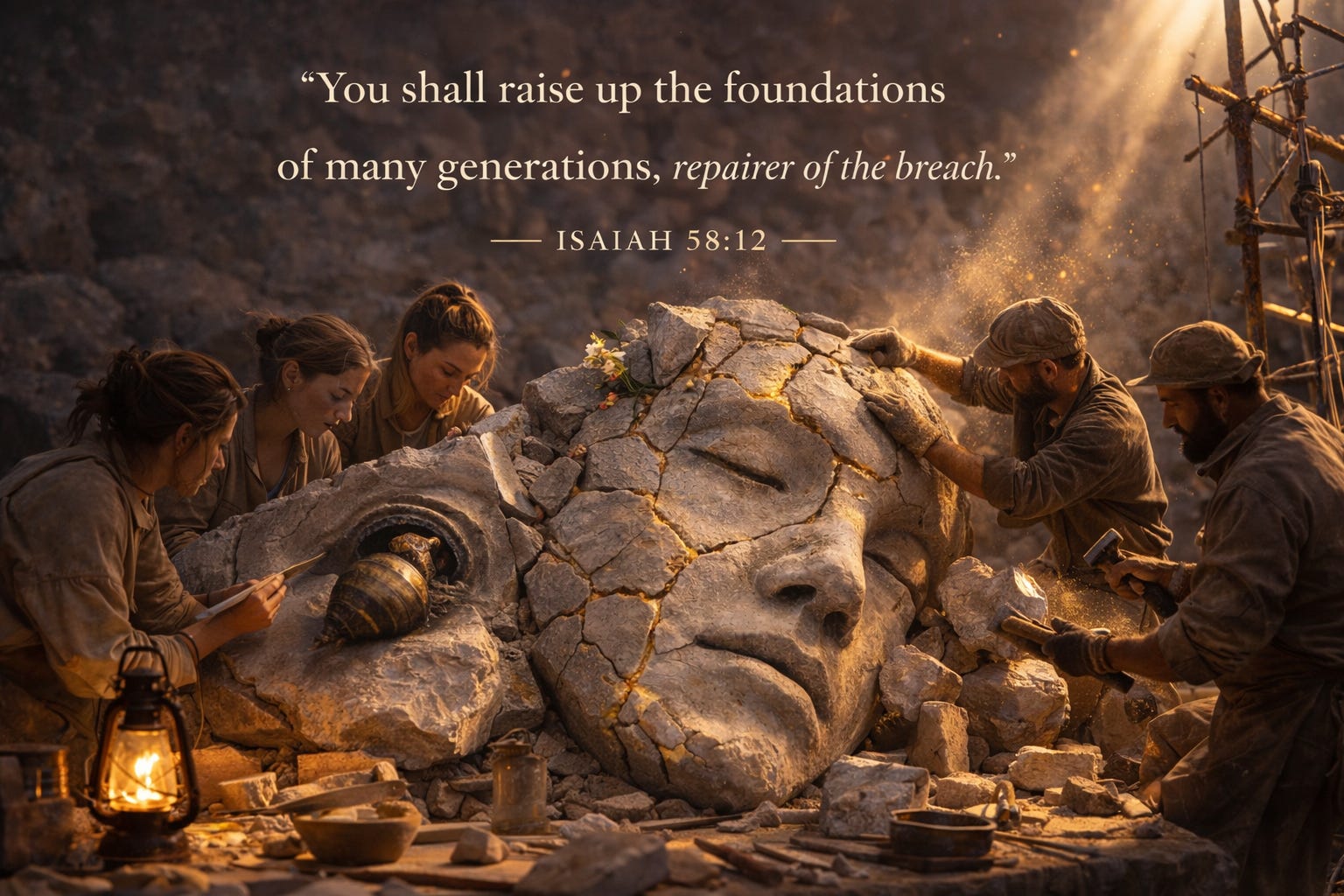
We are all fragments trying to become whole again.
So I simply ask that you show up as the most honest version of yourself in the mirror. Little you is waiting to walk you back to a time when simple was better. We need to play more in our lives so we are not consumed by what the world is trying to make us become = Numb.
With Love and observation, Cristalebelle.
 | A guest post by
|